cOMeta project
Summary
Trace elements play an important role in the oceans acting as nutrients, tracers of present and past processes, and contaminants, but their levels in the marine environment are so low that their detailed study was not possible until the development of trace metal clean sampling techniques and highly sensitive analytical instrumentation (around three decades ago). Despite much progress has been made, there are still gaps in knowledge about the distribution and biogeochemical cycle of trace elements, and this research line is nowadays one of the lines most intensively growing in oceanography.
Iron (Fe) is an essential micronutrient and its scarcity in the oceans is often limiting several processes such as photosynthesis or carbon fixation. The bioavailability of essential trace metals (such as Fe, Co and Zn) directly influences the biological status and biochemical activity of marine organisms and their environmental levels contribute to control the structure and productivity of marine ecosystems. Other elements (such as Pb and Hg) have no known biological function, but are toxic to marine organisms and can also affect phytoplankton and other species’ health and growth. Copper (Cu) is a special case because despite being an essential micronutrient, it is also toxic at concentrations only slightly higher to those providing optimum growth. Understanding the biogeochemical cycle of these elements requires knowledge about their sources (atmosphere, rivers, etc.) and sinks (oceanic sediments), as well as their transport and their chemical form, which is highly under control of organic matter present in the marine environment.
The oceans contain more than six tons of carbon in the form of dissolved organic matter (DOM) which is extremely heterogeneous in nature and origin. It is formed by proteins, polysaccharides, lipids, degradation products of these primary constituents and substances that are resistant to microbial degradation, such as humic or fulvic substances. An important fraction of these substances is able to bind trace elements, forming stable complexes. Therefore, in oceanic and coastal waters, complexed forms of metals are the most abundant and their free ionic form is only at concentrations in the subnanomolar range (Cu2+, Pb2+), and even as low as femtomolar for some elements (Fe3+, Co2+). The main variable affecting metal speciation and bioavailability in seawater, with a relatively constant inorganic composition, is DOM, although the effects of these heterogeneous molecules on metal bioavailability have not yet been completely unravelled.

The present project will focus on the study of several trace metals that are significantly affected by organic complexation in the marine environment, and for which there are important gaps in knowledge of their biogeochemistry and/or bioavailability to phytoplankton. These are the essential metals Fe and Co, the essential and toxic metal Cu, and the toxic metal Pb.
The proposed work combines intensive field sampling (along the salinity gradient in the Ría de Vigo under different hydrologic and oceanographic periods) and analytical work with hypothesis-based laboratory experiments involving phytoplankton (to improve understanding of metal bioavailability in the presence of dissolved organic matter, using well-defined synthetic solutions and natural samples).
cOMeta will contribute to the generation of high-quality knowledge in two important fields of research, that are metal biogeochemistry and metal bioavailability. This project will contribute to expanding knowledge about the behaviour of metals in coastal areas and determining how the presence of DOM affects their transport and bioavailability, thereby identifying metal concentrations that can be tolerated without posing an excessive risk to the environment.
The Ría de Vigo
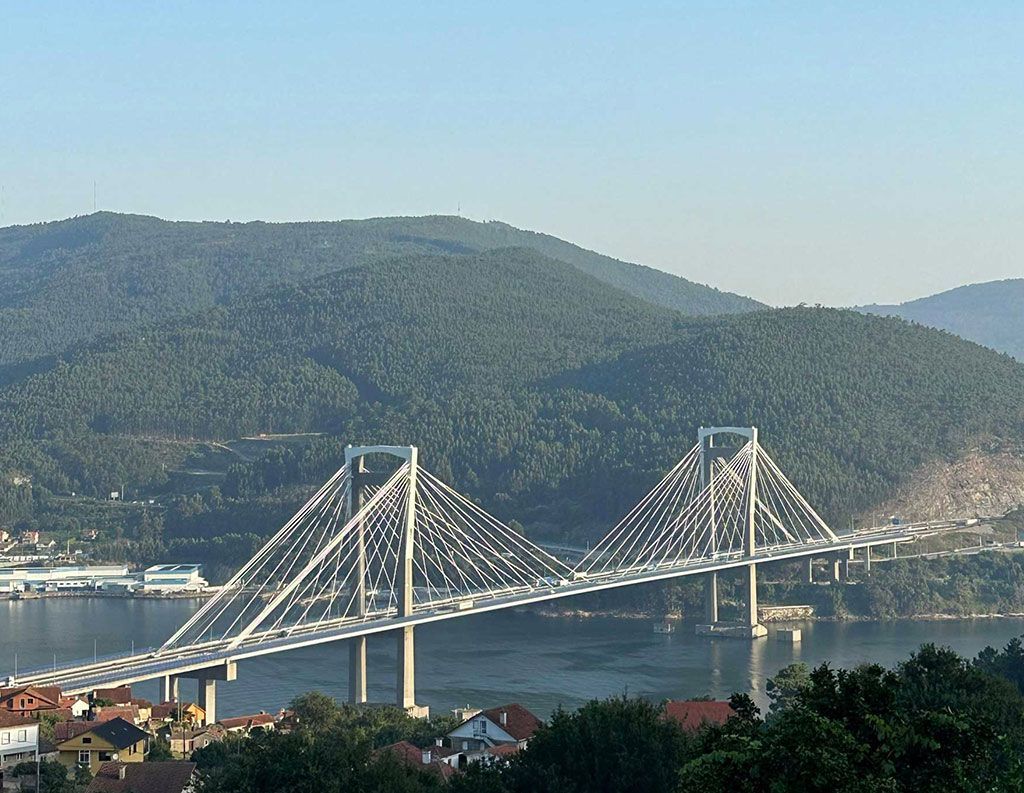
Rías are coastal estuarine systems formed by the flooding of river valleys. The Ría de Vigo is located to the south of the Galician Rías, with a typical oceanic climate with an important period of rain but which tends to be dry during the summer. Due to the presence of continuous upwelling events throughout the year, the primary production of the Ría de Vigo is high, which means that the Rías Baixas produce about 50% of the European mussels production. In addition, the Ría de Vigo is one of the most anthropized of all the Galician estuaries due to its high population (420,000 inhabitants) and the important industry especially in the south associated with naval activity.
Global change has increased anthropogenic pressures on coastal systems and has altered precipitation patterns and ocean currents, including effects on the frequency and intensity of upwelling in the Ría de Vigo, which has direct influence on the biogeochemical cycle of metals. The Ría de Vigo is therefore a suitable system for the type of study proposed in this project since it combines high anthropization (Cu and Pb) with high productivity (Co and Fe) and a high exchange of its waters with the adjacent coastal area. The results obtained will be extrapolated to other world estuarine systems with the same characteristics and singularities as the Ría de Vigo.
Hypothesis
The starting hypothesis is that most metals (such as Fe, Cu, Pb and Co) with origin in the rivers and coastal areas are transported to the sea both in the particulate and dissolved form thanks to the presence of organic matter in the water, and that their bioavailability to phytoplankton is also influenced by the presence of DOM in the water by mechanisms that have not yet been unravelled.
In particular, cOMeta aims to find answers to several questions, such as: which type of organic ligands bind Fe in the Ría de Vigo and to what extent do they contribute to Fe solubility and export?
What is the main chemical form of Co in the Ría de Vigo? What is the mechanism that phytoplankton use to internalise Cu and to what extent is it affected by Fe and by DOM? Does the speciation of Cu, as measured using a multi window approach, adequately predict Cu bioavailability? Is Pb transported along the Ría de Vigo from the inner sediments and in which form? Does DOM decrease or enhance Pb bioavailability to phytoplankton in real environmentally relevant conditions?
Main Objective
Evaluate the role of organic matter in key processes involving the transport, chemical speciation and bioavailability of essential (Fe, Co, Cu) and non-essential (Pb) metals in a coastal system.
Partial objectives
Objetive 1 (O1)
Evaluate the role of organic matter in the transport of particulate and dissolved metals along the Ría de Vigo, from the inner part to the adjacent platform. PI: Juan Santos Echeandía.
IP: Juan Santos Echeandía.
Objetive 2 (O2)
Evaluate the complexation capacity of riverine and marine DOM, including its interactions with Cu, Fe and Pb, and its relationship with DOM quality and ligand concentrations. PI: Juan Santos Echandía. IP: Juan Santos Echandía.
Objetive 3 (O3)
Understand the mechanisms of Cu uptake by phytoplankton cells and evaluate the influence of DOM and Fe in Cu bioavailability. PI: Paula Sánchez Marín. IP: Paula Sánchez Marín.
Objetive 4 (O4)
Evaluate the influence of marine DOM on Pb bioavailability to phytoplankton at environmentally realistic concentrations of Pb. PI: Paula Sánchez Marín. IP: Paula Sánchez Marín.